



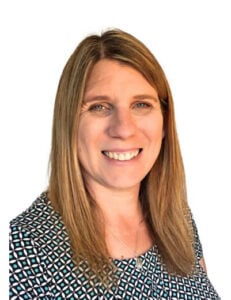
- In Person
My specialist experience developing meaningful and trusting relationship with children with SEN: Throughout my time as a class teacher, I prioritised developing individual relationships with pupils in my class, I organised the learning to ensure that each pupil had regular focussed 1:1 work and play sessions. In my more recent role, I taught 1:1 and group sessions across the school, it was essential to the success of these sessions for me to quickly build meaningful and trusting relationships with each child. Following the child’s lead and interests is often very effective in establishing trust, whilst providing consistency, structure and predictability for those children who need that.
My specialist experience teaching children with ADHD: I have taught children with ADHD in classroom, small group and 1:1 settings. This has included a range of different ADHD profiles - hyperactive/impulsive, inattentive/distractible or a combination. I make use of the child’s interests, integrated into the learning and as brain breaks in between other topics. I use kinaesthetic learning as much as possible and recognise the need for movement breaks to aid attention and focus. I have found that visual strategies are often highly effective, both within the learning activity and to support understanding of routines and expectations.
My specialist experience teaching children with a PDA profile: I have supported many pupils with a PDA profile (those with and without a formal diagnosis). This has been both within school and home settings. I use a low-demand, indirect approach, building connection and trust with the young person is the priority. I follow the child’s lead in terms of topics and engagement with learning, adapting flexibly during sessions as needed. I have used the PACE approach, which uses Playfulness, Acceptance, Curiosity and Empathy to help the child feel safe. I have found this approach works well with children who have a PDA profile.
My specialist experience teaching children with dyslexia: I use a range of teaching methods to support children with dyslexia, including multisensory approaches, engaging the pupils in seeing, touching, hearing and moving while they learn. I used systematic phonic schemes but adapt and personalise these for individual needs. I use visual supports to break down complex tasks and to help pupils organise their thoughts and work tasks. I offer lots of opportunities for repetition and reviewing previous learning.
My specialist experience teaching children with autism: I have taught children with autism for 25 years mainly within Special Schools, from Early Years through to post-16, teaching all subjects within the National Curriculum, plus independence and life skills. I was Head of Autism for 9 years, providing support for pupils, staff and families both within the school and as part of an outreach service. My focus was on reducing barriers to learning for pupils and supporting their development of key skills. I have used the SCERTS and DIR Floortime frameworks to assess and plan programmes for individual pupils.
My specialist experience teaching English including reading, writing and spelling: I have supported English learning across the primary and secondary age range, and across the ability range, from early literacy skills up to functional skills and GCSE. When teaching reading, I have used phonics based approaches, whole word learning and social sight vocabulary. I use a range of texts, including special interest themes or ones related to another curriculum subject to aid engagement in reading. I have a lot of experience working with reluctant/resistant writers. I use strategies related to developing fine motor skills, exploring alternative methods of recording written work, in addition to teaching the executive function skills needed for organising thoughts in preparation for writing them down. I use low pressure methods to get pupils back into writing after previous negative experiences.
My experience working with young people to boost their confidence and self-esteem: I have worked with many young people who have lost confidence with their learning, sometimes through missed education. I use a carefully scaffolded approach, building on the skills that they already have and are confident with, helping to give them a sense of achievement and pride in their abilities and their work. I have also used structured programmes which work on self-awareness and self-esteem.
My specialist experience helping children to engage in learning: I have extensive experience of supporting children with developing ‘ready to learn’ skills; these include sensory regulation skills, attention skills, organisational skills, raising self-esteem/confidence levels. I often used a play-based approach, using the child’s own interests and strengths to build a programme of learning. I have found the Attention Autism programme to be very effective in engaging learners, through its focus on visual learning. I use visual strategies that are tailored to the individual, including timetables, social prompts, flow charts and adapting the curriculum to make it more accessible visually. I use the Alert Programme to support sensory regulation skills, enabling the child to be calm, alert, focussed and ready to learn.
My specialist experience supporting students to develop their independence: In any session, my aim is to provide the right amount of support that enables a pupil to feel confident and to achieve, whilst being mindful of how to move on to a greater level of independence. I use the SCERTS assessment framework to identify the best supports for an individual pupil. This can include scaffolding tasks, backward/forward chaining, breaking down tasks or providing visual supports, templates, or reminders to enable the pupil to complete tasks independently.
My specialist experience re-engaging students, who are currently or have been out of formal education: I have worked with students who are out of school, those who are waiting for a specialist placement, and those who are on a part-time timetable or reintegration programme. I use relationship-based strategies to build trust, increase confidence and re-engage the student with learning. I use the student’s own interests and preferences to increase intrinsic motivation and accessibility to the given curriculum. Or I can design a bespoke curriculum, which is tailored to the individual student and their current learning needs.
My specialist experience teaching Maths: I have extensive experience teaching early number and early mathematical concepts, using practical and concrete methods. As the maths learning develops, I continue to use practical methods alongside more formal maths learning. Where possible I teach using a real-life maths approach, integrating the concepts into everyday activities and familiar tasks. I use highly visual resources and equipment, including Numicon and ‘I See Maths’.
My specialist experience teaching Science: I have taught Primary Science up to year 6 and supported secondary pupils up to GCSE with study skills and revision for their Science curriculum. I have explored different ways of approaching the subject, including practical experiments using objects generally available in the home/kitchen.
My specialist experience teaching young people with SEMH: I have worked with a range of children and young people with SEMH needs. I use a relationship based approach to build trusting relationships with the young person and build on their strengths. I also use frameworks such as DIR Floortime, the Alert Programme and Zones or Regulation to support young people to regulate their emotions, using sensory, language and thinking strategies as appropriate.
My experience teaching Study Skills & Executive Functioning Skills: I have worked with many secondary aged and upper primary pupils on developing independent study skills, using visual scaffolds and prompts, modelling and collaborative strategies. I focus on supporting pupils to identify priorities, make their own plans and develop strategies that work for them day to day.
My experience teaching Community Support and outside activities: All of the schools that I have worked in over the years, have had strong community links, with pupils going out in to the community weekly. So I have extensive experience of supporting pupils to access different community spaces, in order to practice communication skills, money skills, leisure activities or work experience amongst other skills.
My specialist experience teaching children with speech and language needs: I have worked closely with Speech and Language therapists throughout my teaching career, integrating therapy programmes into classrooms and homes. I have experience using a range of AAC to communicate with learners – including PECS, Makaton, symbol-based communication books. I use Intensive Interaction, Floortime and Attention Autism strategies to develop early communication skills with pre-verbal learners; whilst using Social Skills programmes, Social Stories and Comic Strip Conversations to support social communication development for more verbal learners.
My experience teaching primary National Curriculum: During my time working as a 1:1 tutor, I have supported pupils in all National Curriculum subjects at both KS1 and KS2 level. This has been as part of a structured scheme of work or to follow a pupil’s special interest within that subject.
My specialist experience working with children with sensory processing difficulties: I have done a lot of collaborative work with Occupational Therapists, with a focus on children with sensory processing difficulties. Identifying children who are over and under-sensitive to different senses. I have supported implementation and adaptation of sensory diets into classrooms and homes. This has included movement, auditory, visual, tactile and oro-motor strategies. I have extensive experience with the Alert programme and have also recently used Zones of Regulation and Autism Level Up, which all give a structure and strategies for supporting sensory regulation.
My specialist experience teaching early years: I have taught a range of abilities within early years, using play based and child-led approaches including DIR Floortime & Intensive Interaction. I have used the EQUALS semi-formal curriculum for assessment and planning, which has elements of both structured and free play learning. The Attention Autism & Curiosity Programme have played an important role in my overall approach to planning learning opportunities for early years pupils. I have used a small steps curriculum for both Maths and English, which breaks down all the elements needed in order to master an individual skill and can show progression more clearly.
- PG Cert (Autism Children) UNIVERSITY OF BIRMINGHAM
- Graduate Teacher Programme (QTS) UNIVERSITY OF READING
- PGCE (FE) UNIVERSITY OF WALES, CARDIFF
- BA (Hons) Education & Music UNIVERSITY OF WALES, CARDIFF
- SCERTS – Emily Rubin
- Attention Autism – Gina Davies
- PECS Level 1
- Critical Communication Skills – Pyramid Education
- Alert Programme – for self-regulation
- DIR Floortime
- PDA – National Autistic Society
- Anxiety & Autism – Centre for Autism, Reading University
- Psychological interventions for adolescents with Autism – Charlie Waller Institute
- Autism, ADHD & Executive Functioning - Attwood & Garnett
I believe in relationship-based and developmental teaching methods; children learn best when they feel safe, secure and connected and when the learning opportunities are matched to their next developmental steps. I draw from a range of approaches, some more directive/structured and some more child-led/flexible; talking to you and getting to know your child will inform which approaches might suit them best.
- You’re seeking a specialist neurodiversity affirming tutor.
- You're looking for a tutor with extensive SEN experience, including Autism, ADHD, Down Syndrome and GDD
- You want to develop your child’s communication skills
- You’re looking for a tutor with knowledge and experience of working with children with high sensory needs
- You want support integrating therapy and learning plans into the home and family life.
- General Engagement, Confidence and Self Esteem
- Primary (Maths and/or English/Literacy)
- Secondary English (including GCSEs)
- Study Skills & Executive Functioning Skills
- Social Communication & Language Skills
- Functional Skills (English & Maths)
- Homework Support
- Early Years
- Primary
- Secondary
- Post 16
- Anxiety
- Autism
- ADHD & ADD
- Dyslexia
- PDA (Pathological Demand Avoidance)
- SEMH (Social & Emotional & Mental Health needs)
- Working Memory and Processing Needs
- Speech and Language Needs (including non-verbal)
- Global Developmental Delay & Learning Difficulties
- Complex & Medical Needs (including Cerebral Palsy; Brain Injury; Epilepsy and other needs)
- Other SEN
I love open water swimming and kayaking (even in the middle of winter) – it’s great for the soul. I play the piano and the oboe and am currently teaching myself how to play the guitar.