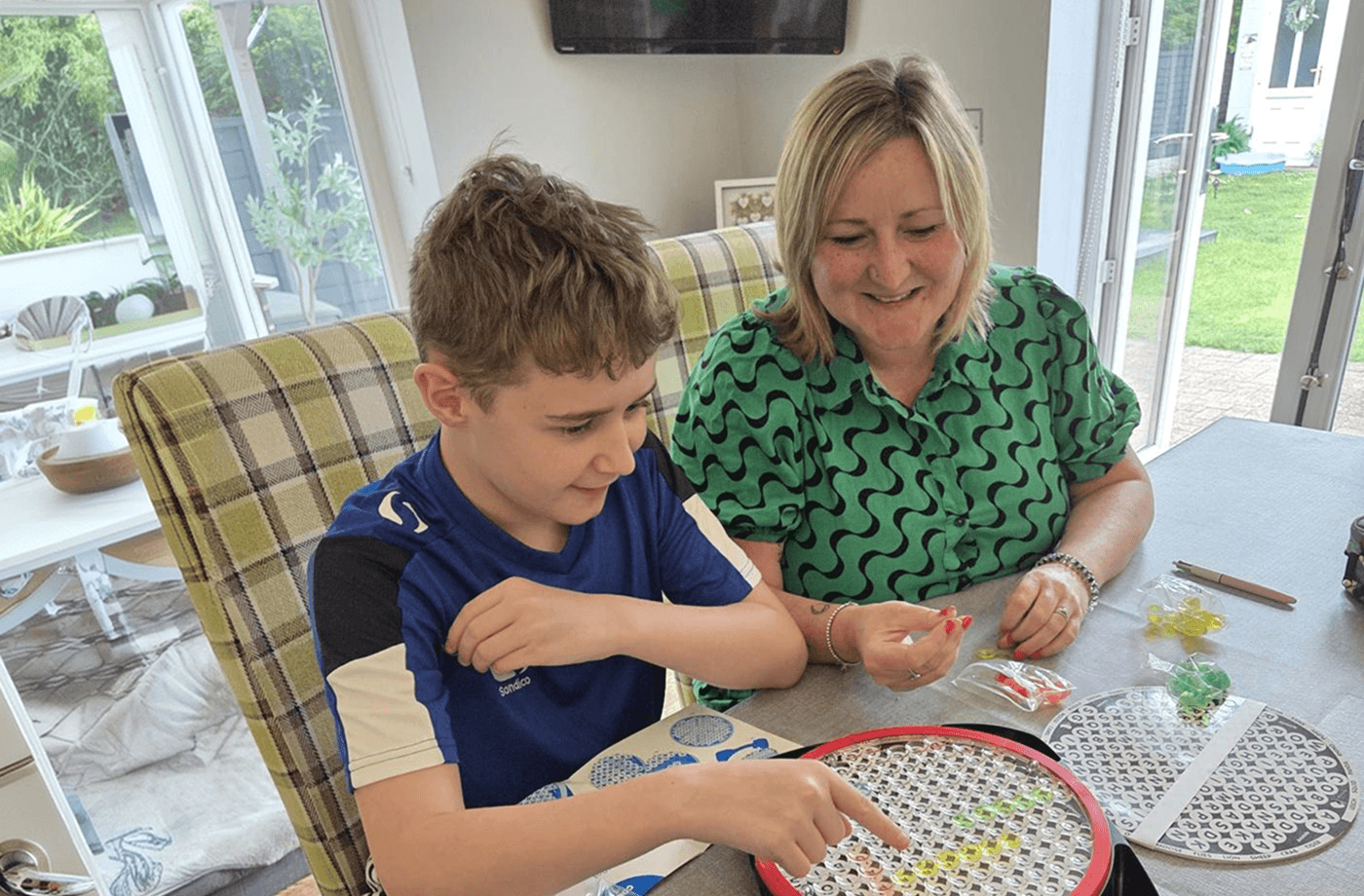
My specialist experience working with young people with SEN to develop trusting and meaningful relationships;
I have specialised in working with students with SEN throughout my teaching career. I am fiercely committed to the young people that I work with and I passionately believe that the tutor/student relationship is key to the academic and emotional development of the student. I prioritise this relationship and work to earn the trust of all the students that I support, including those considered hard to reach. I work empathically and effectively with parents and outside agencies. I have three children with personal experiences of Dyslexia, ADHD and AuDHD (with PDA traits). My youngest daughter had EBSA from Yr8 and received EOTAS in years 10 and 11. I understand the daily family experience as well as the educational implications and possibilities.
My experience as an EOTIS coordinator;
I am the parent of a student who experienced EBSA resulting in non-attendance and the award of an EOTIS package. As such I have experienced this journey. I managed her package, including tuition hours, academic curriculum, therapeutic interventions, specialised interventions, accommodation, transport, exam entries and access arrangements and post 16 provision. I have managed EOTIS packages for students as a consultant EOTIS co-ordinator and I have over 15 years experience as a SENDCo managing EHCP provision and exam access arrangements and organising therapies such as Speech and Language and Occupational Therapy for students. I have worked closely with providers and outside agencies. I know what students are entitled to and what is possible and I do not settle for less. I think outside of the box to ensure that a student’s needs are met and I will work with a Local Authority if I believe that needs are being missed or the provision is inadequate or incorrect. I am qualified to assess for exam access arrangements and have performed this role for many years. This experience is invaluable.
My experience working with young people with ASC (autism);
I have taught children with ASC most of my career; as a class teacher and as a SENCO I have been responsible for the educational journey and support of students with ASC both in primary and secondary schools. I have worked with schools to develop an inclusive approach that accommodates the challenges that students face rather than expecting the student to ‘fit in’ with the school, including facilitating the integration of a non-verbal child with ASC into a reception class; facilitating the training of LSAs in Makaton to assist student communication and negotiating uniform accommodations to acknowledge sensory difficulties. I have always worked from the perspective of the student, working with their special interests and strengths and working in partnership with them, supporting any difficulties by using multi-sensory methods of teaching, routine and visuals.
My experience working with young people with PDA;
I have always supported and protected students with PDA traits. I encourage a collaborative approach where the student is aware of what we are aiming to achieve and is able to exercise choice over how or what they are doing. I work at the pace of the pupil and never force things. If we need to have down time then we do. I always have a collection of alternative activities that are low demand but purposeful and involve the pupil’s special interests. We return to the more academic task when they are ready, even if that is on another day.
My experience working with young people with dyslexia;
My first ever 1:1 SEN student had un-diagnosed dyslexia. The negative impact that this had on him convinced me of the importance of looking at the pupil as a whole, not just the presenting issue. Addressing his literacy difficulties transformed his self esteem, his school experience and his life direction. This motivated me to complete a Diploma for Teachers of Students with Specific Learning Difficulties which qualifies me to assess students for dyslexia; to support students 1:1 and in small groups; to assess for exam access arrangements to help them when sitting exams and to train and mentor teachers to effectively support students in the classroom. I encourage students to own their difficulties and learning styles and to know what works for them and to use it. I use a multi-sensory approach to developing literacy skills; focusing on phonics while progress is being made and incorporating some rules of spelling and varied multi-sensory ways to learn spellings to add fun. I also train teachers on the impact of dyslexia in the classroom and coach them to develop dyslexia friendly teaching practices. I encourage the use of technology to support students, to improve access to material and to provide alternative forms of recording of student knowledge.
My experience working with young people with sensory and/or auditory processing needs;
I have supported students to learn strategies to help them to understand and manage their sensory sensitivities; introduced sensory diets to school; supported schools and teachers to develop their understanding of the impact of these issues and how to accommodate them in the classroom through the use of visual supports, scaffolding, movement, technology and other accommodations. I have also supported students with visual and hearing impairments, ensuring that the necessary accommodations are in place for them and material is being presented in a manner that they can access, particularly encouraging the use of technology.
My experience working with young people with anxiety;
I have extensive experience of working with students with anxiety. When I worked as a Behaviour Support Teacher most students were highly anxious: I completed a level 3 qualification in Counselling Students in Educational Settings to support my work with these students. As a SENDCo I spent many hours working with anxious students to identify the causes of their anxiety and developing strategies that supported them in these situations. We also developed their social skills, self-esteem and self-confidence. Supporting the student to become a confident and competent young adult is absolutely central to all of my work. I want students to be healthy, to thrive, to be able to be kind to themselves and to have the skills to navigate life with confidence. I believe that education extends beyond academic achievement.
My experience supporting young people with Social Emotional and Mental Health needs;
Our young people with SEN are especially vulnerable to SEMH difficulties. I have always worked to support their needs in this area, often working in partnership/liaison with many mental health professionals to support students. My relationship with students is paramount as this is the basis for everything; work is always presented in a manner that enables them to achieve and experience success, I constantly seek to build student self esteem and to give them the tools to develop and support this themselves. I accept the student where they are at each lesson and support them accordingly. I am extremely flexible and will adapt to meet the needs of the student as I find them.
My experience working with young people with ADHD;
I have worked closely with many students with ADHD. I have attended training sessions on understanding ADHD and supporting students. I have provided training for teachers on working effectively with students with ADHD in their classroom and I have worked with students of all ages to develop individual, age appropriate understanding of their ADHD, to help them to take ownership of it and to develop strategies to support academic success and the development of strong self-esteem. Experience has taught me that relationships are so important for these students and I always encourage teachers to see the strengths and the good in the student, to look beyond the behaviour, to build their relationship and to protect the student’s self-esteem.
My experience teaching Maths;
I have taught Maths to students from 5-16 years old, including GCSE Maths. The key to Maths is confidence and practise. I provide physical manipulatives where possible to aid visualisation and kinaesthetic learning then move from tangibles to the written problem and make sure that all of the accompanying language is fully understood, again using visuals to support learning. I provide examples that make Maths relevant to everyday life, making it more purposeful and less scary. I also focus on repetition and over-learning, providing the opportunity for confidence to develop.
My experience teaching English;
I have taught English across the age phases from 5 years to GCSE as a specialist English teacher and as a Dyslexia Support Teacher. Recording our ideas can be scary for children with SEN, whatever age. I aim to overcome this by using alternative recording methods if they are helpful, scribing for them, using video, dictation, mind maps, power points, whatever works for them. I aim to make activities varied, creative, imaginative, colourful, active. I read to and with students often, frequently revisiting beautiful picture books to show that any reading is valuable and enjoyable. I use Colourful Semantics to help young writers to develop their writing and to structure sentences. Above all, I vary my approach to keep the student interested and engaged.
My experience teaching Science;
I have taught Science across the age phases from 5 years to 11 years and I have supported students studying KS3 and 4 Science, both in the classroom and in 1:1 lessons. Providing real world examples and practical activities for the topic being covered helps to develop understanding and recall of the subject matter. At GCSE we also consider revision strategies and practise answering exam questions. Recording of information will depend on the student’s preferred working methods, using video, dictation, mind maps, power points, whatever they prefer. I aim to vary my approach to keep the student interested and engaged.
My experience developing confidence and self-esteem;
I have delivered many self-esteem training sessions to teachers and have run many group sessions with children aimed at developing their self-esteem. I believe that this is the first job of any teacher that works with students with SEN and as such it is woven into every interaction that I have with a student. I always notice the positive. Any corrective comment is always wrapped by positive comments. The life experience of our children is often challenging and they are frequently aware of their differences from others, even if they are not sure why. I know that with time, confidence and self-belief they can achieve their potential but that this needs to be supported and developed by the adults in their lives. I always work from a place of recognising and reinforcing the strengths of the student and developing their understanding and awareness of ways to support themselves and to advocate for themselves. This work can involve games, role play, social stories and themed tasks.
My specialist experience providing engaging sessions to inspire a love of learning;
For all students learning experiences must be engaging or they do not learn. This is especially true for students with SEN and over-learning is key; one has to be creative and present the same information in a variety of different ways as students will not repeat work for the sake of it. Children with SEN often have specific interests that will hold their attention for extended periods of time. I tailor lessons to include their areas of interest where possible and vary lesson input in content and activity, not doing anything for too long.
My skills and experience supporting young people to develop their independence.
Students need to have the confidence to risk independence. I offer the safe base that they need from which to explore the world. I aim to equip them with the skills and understanding that they need and I will practice activities with them until they are confident to try them independently, with me close by to support them. Self-esteem development work is central to my teaching practise. Some sessions are explicitly designed to develop self-esteem and confidence, all other sessions incorporate practices designed to build student self-esteem, spotting success, providing specific, positive praise. I have worked with students of all ages to develop independence, including toilet training young children; taking children to the shop to buy their own things; planning and taking bus and train journeys to practice independent travel. The task identified for the student to achieve independently is broken down into steps that are then analysed for the necessary skills and these skills are taught and practised until they are secure, with tasks being practised together before they are attempted independently.
My experience teaching community support and outside activities;
As a Primary school teacher I have always taught PE as part of the curriculum. I am an active person and love sport and was very happy to do this. I successfully led the Duke of Edinburgh Award Scheme within a secondary school at Bronze and Silver level for several years. As a SENDCo I organised life skills support and preparation for adulthood for students which included community activities. I have also arranged for children struggling at school to listen to younger children read once a week; sometimes this was different year groups in a Primary school, other projects involved Secondary School students visiting a Primary school. These were positive, affirming experiences for the children involved. I like to think outside of the box. To be creative. To encourage children to go out and be part of the world. I am also mindful that this is tricky for many students and therefore any community work is carefully planned, scaffolded and supported.
My experience teaching social communication and language skills;
I teach social communication and language skills through games, role play and kinaesthetic activities as much as possible. For SEN children these activities can be very challenging so they must be fun, as well as relevant to their everyday experiences. Where possible this input is woven into the content of other lessons to make it part of everyday practice and not a ‘bolt on’.