



Key Takeaways:
- Online tutoring for SEN children can reduce anxiety by offering a familiar, predictable learning environment.
- Many SEN pupils benefit from one-to-one online tutoring tailored to their individual needs and learning styles.
- Online SEN tutoring allows families to access specialist tutors beyond their local area.
- For some children, particularly those with complex or physical needs, face-to-face support may still be more appropriate.
- Trial sessions are often the best way to decide whether online tutoring is suitable for your child with SEN.
Online tutoring has become increasingly common, particularly since the pandemic. Many families now turn to online when in-person support is difficult to access or when specialist tutors are not available locally. Every SEN child is different and understanding both the benefits and limitations of SEN online tutoring is key to making an informed decision.
How Online Tutoring Can Support SEN Children
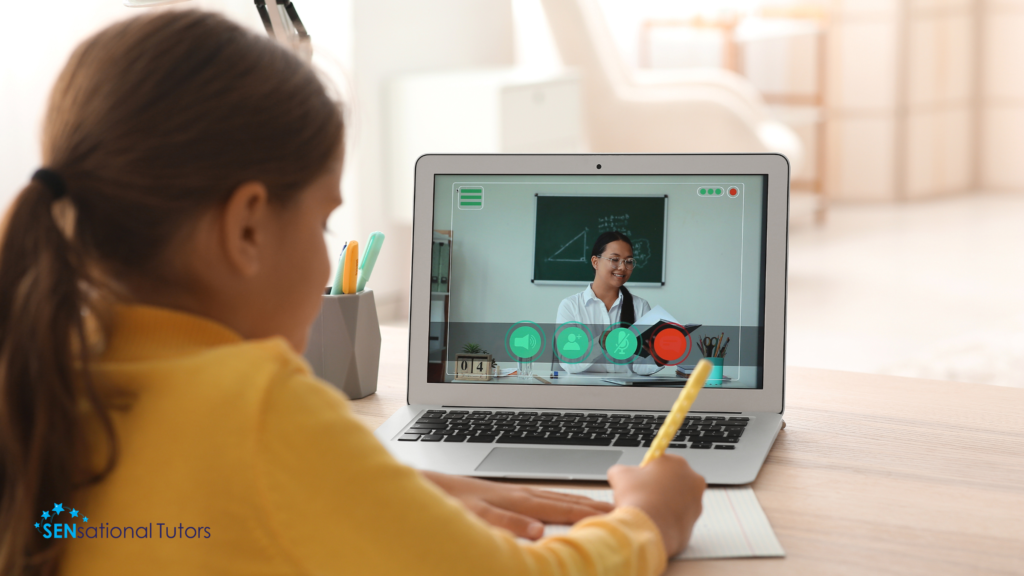
Many children with SEN experience anxiety, sensory sensitivities, or difficulty coping with unfamiliar environments. In those cases, online tutoring for children with special educational needs can offer a calmer and more predictable alternative to face-to-face sessions.
Personalised one-to-one support
Online SEN tutoring allows lessons to be adapted to the child, rather than the child adapting to a classroom. Tutors can tailor pace, communication methods and resources to suit neurodivergent learners, including autistic children and pupils with ADHD or dyslexia.
Flexibility and reduced pressure
One of the most searched benefits of online tutoring for SEN is flexibility. Sessions can be scheduled around a child’s energy levels, medical needs or anxiety, without the added pressure of travel.
Familiar and comfortable learning environment
Learning from home can help SEN children feel more in control. Some pupils prefer to communicate using chat functions, keep cameras off, or take short movement breaks, all of which are easier in virtual tutoring for SEN pupils.
Access to specialist SEN tutors
Parents often search for “best online tutoring for SEND students” because online platforms remove geographical limits. This makes it easier to find tutors with specific experience in autism, ADHD, dyslexiaor anxiety-based needs.
Challenges of Online Tutoring for SEN Children
While online SEN tutoring works well for many families, it is not the right fit for every child.
Technology and independence
If a child struggles with technology, online tutoring may require ongoing adult support. Internet disruptions can also interrupt sessions, which may be challenging for children who find transitions difficult.
Building relationships
Some parents worry about rapport when comparing online vs face-to-face tutoring for SEN. While many tutors build strong online connections over time, younger children or those with profound needs may benefit more from in-person interaction.
A Tutor’s Perspective: Teaching SEN Children Online
Sarah, a SENsational Tutor with over ten years’ experience, now works almost exclusively in online tutoring for SEN children: “I have been teaching online for over ten years. In particular, during Covid, my online hours increased. I have never looked back, but I would say that there are pros and cons to be aware of, when considering a virtual platform.
“Due to anxiety and overwhelm for some SEND learners, they often appreciate that onscreen tutoring puts a distance between them and their tutor. In addition, students can move around the home which suits SEND students that require extra mobility. They may even take their lesson into the garden!”
“The timing of sessions can be so flexible – I have some pupils early in the morning that would not be doable face-to-face as it’s a busy time for many families. However, my pupil can just set themselves away from everyone and have a lesson without interruption.
Sarah notes that online tutoring allows for opportunities to boost self-esteem: “So many young people are digitally literate today, I learn from them! They may introduce me to a new game or tool, and that empowers them. I had one pupil who liked to say, “let me show you how to do this”; it boosted his confidence and independence skills.”
Sarah points out that there are some areas to be mindful of: “I haven’t taught a child online with PMLD (Profound and Multiple Learning Disabilities.) I would imagine that a face-to-face environment would be more fulfilling because of the need for a closer proximity to read all social cues and administer any potential medical equipment required.”
Parents can feel hesitant about using virtual platforms for their child, particularly when it comes to engagement and quality of interaction. One of the most reassuring indicators is clear, up-to-date feedback from other families. When exploring online tutoring, parents should look specifically for reviews that reference virtual sessions, including how tutors communicate onscreen and adapt their approach remotely. This kind of transparent, first-hand evidence offers reassurance and helps build confidence in effectiveness of online learning.
Whilst it may not suit every situation, online SEN lessons are here to stay and there are some huge benefits. If you are doubtful, consider all the positives and possibly try a couple of sessions for your child to test the water, before you decide.
Discover empathic online tutoring for SEN children
Finding the right online tutor for a child with SEN can be challenging. Many families struggle to find support that truly understands their child’s individual needs, not just academically but emotionally too.
Our experienced tutors and specialists are highly skilled in SEN support, creating calm, supportive learning environments where children feel safe and able to thrive.
Frequently Asked Questions
Is online tutoring suitable for children with SEN?
Yes, online tutoring can be suitable for many SEN children, particularly those who benefit from structured, one-to-one support in a familiar environment. Suitability depends on your child’s needs, confidence with technology, and learning style.
Does online tutoring work for autistic children?
Many parents search this specifically. Online tutoring can work well for autistic children who prefer predictable routines, reduced sensory input, and clear communication. However, every autistic child is different.
Is online tutoring better than face-to-face tutoring for SEN?
There is no one-size-fits-all answer. Online tutoring offers flexibility and access to specialists, while face-to-face tutoring may suit children who need physical prompts or close observation.
What equipment does my child need for online SEN tutoring?
Typically, a laptop or tablet, stable internet connection, and a quiet space. Some tutors also use interactive tools such as screen sharing or visual aids.
How long should online SEN tutoring sessions last?
Parents often ask this. Session length depends on age, attention span, and needs. Many SEN tutors recommend shorter, more frequent sessions for younger or neurodivergent learners.
Can online tutoring help with anxiety and confidence for SEN children?
Yes. Many SEN parents report reduced anxiety with online tutoring, as children learn in a familiar environment and feel more in control of communication.
Please note: The information provided within this blog, by SENsational Tutors, is for general information purposes only. We appreciate that every person is unique and any advice/experiences mentioned within the content of each blog may not be reflective of your own personal experience. All information on the site is provided in good faith and is for educational informational purposes only. It is not a substitute for professional advice. Before taking any actions based upon such information, we encourage you to consult with appropriate professionals.

Author: JOANNA GIBBS
https://www.sensationaltutors.co.uk/founder-and-director/