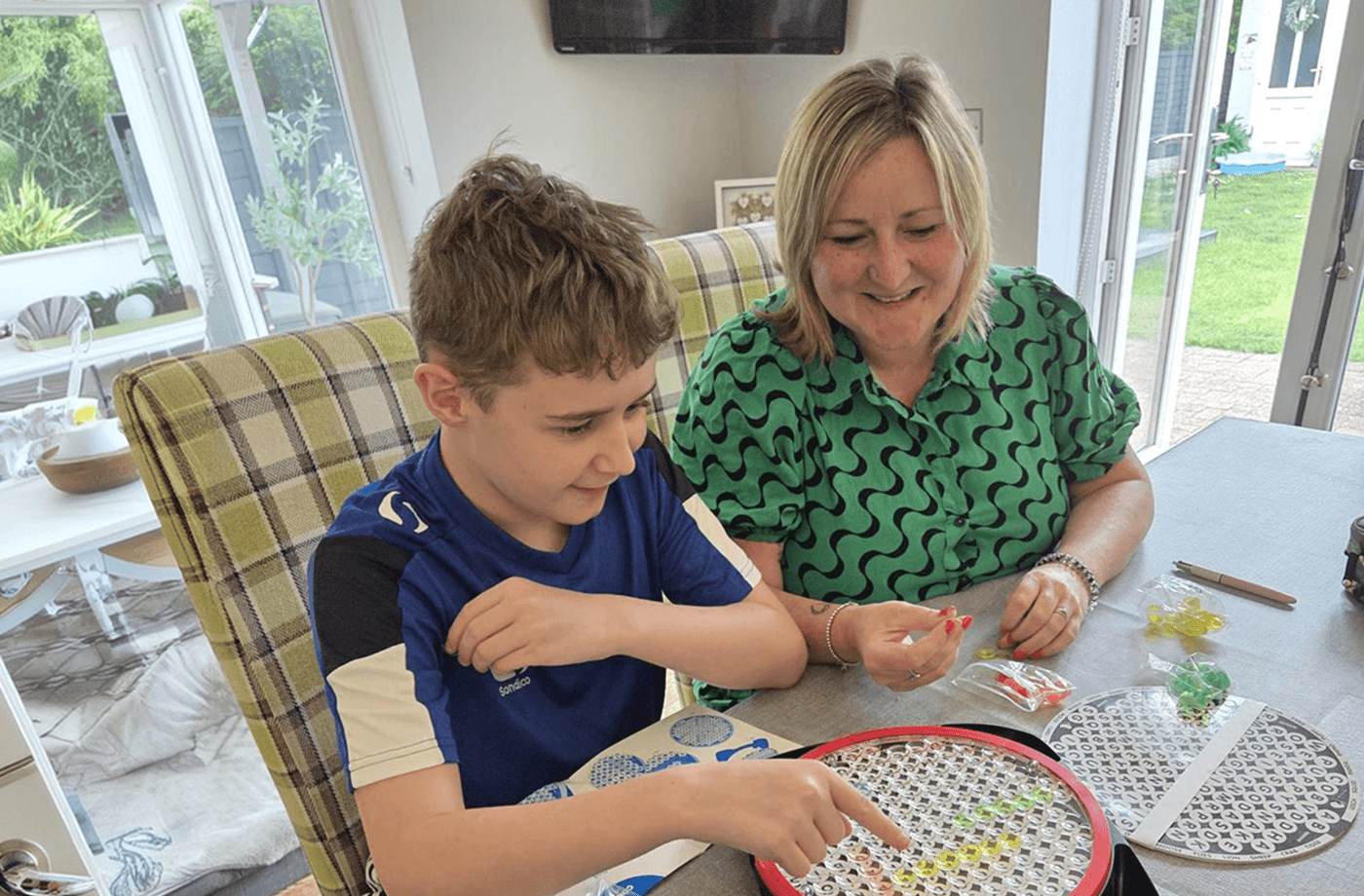
I am a highly experienced SEN teacher with extensive knowledge of, and both professional and personal experience within, the world of SEND. Throughout my career, I have worked in both mainstream and specialist settings, most recently as a Lead Teacher within an Autism Base.
As an SEN teacher, it has always been my priority to build trusting relationships with the children I support. I take the time to get to know each child, including their interests, strengths, communication style, regulation profile and individual needs, as well as working closely with their families. This enables me to create meaningful and engaging learning opportunities that are specifically tailored to each learner, with the aim of helping them achieve their full potential.
My experience teaching young people with ASC (autism):
I have had the privilege of working with autistic children for the past seven years within an Autism Base attached to an Outstanding mainstream primary school, which is also a Flagship School for the IQM (Inclusion Quality Mark). I support learners with a wide range of needs. For the past two years, I have worked as Lead Teacher, allowing me to share my knowledge, skills and experience with colleagues, schools and other professionals within the local community.
Throughout my career, I have worked closely with Speech and Language Therapists, Occupational Therapists and Educational Psychologists to develop and implement personalised strategies that enable each learner to feel safe, regulated and ready to learn. I have extensive experience in using startegies such as Attention Autism, the Curiosity Approach, trauma-informed practice, sensory circuits, Lego Therapy and Intensive Interaction.
Communication is a key area of my expertise, particularly when supporting pre-verbal and minimally verbal learners. I have worked closely with Speech and Language Therapists to introduce and embed a range of communication approaches tailored to individual needs, including high-tech AAC, low-tech AAC such as Core Boards and PODD, visual supports and objects of reference. I understand the importance of giving children meaningful ways to express their needs, make choices and develop their independence.
I also have extensive experience supporting learners with regulation, routines, social communication and essential life skills. This includes using visual timetables, now-and-next boards, consistent routines, sensory circuits, Occupational Therapy strategies and approaches such as Zones of Regulation. Above all, I believe that strong relationships built on trust, patience and consistency are at the heart of effective SEN support. I aim to create a calm, nurturing and engaging learning environment where every child feels understood, valued and able to make progress.
My experience in supporting young people with ADD/ADHD:
I have experience supporting children with ADHD, ADD and a range of attention and executive functioning needs. I have also completed an ADHD Mastery course to further develop my understanding of effective and practical approaches. My aim is always to help children recognise their strengths, understand how they learn best and develop strategies that enable them to get the most out of every learning situation.
I use a range of tailored strategies, including breaking tasks into manageable steps, chunking work, providing clear visual aids, creating personalised checklists and incorporating regular work–recovery exercises to support attention and reduce cognitive overload. I also use structured games and practical activities to develop impulse control, turn-taking and flexible thinking, alongside sequencing and sorting activities to strengthen organisation, processing and planning skills. Where appropriate, I incorporate movement and sensory opportunities into sessions and provide clear, achievable goals so that children can experience success and gradually develop greater independence. Above all, I take a positive and individualised approach, helping children understand their own needs and build a toolkit of strategies that they can use across different environments and situations.
My experience teaching young people with a profile of PDA:
I believe effective tutoring starts with getting to know the young person as an individual—their interests, strengths, communication style, motivations and aspirations—and building learning around these. For a young person with a PDA profile, I would take a flexible, collaborative and low-pressure approach, recognising that feeling listened to, respected and in control can be essential to successful engagement. Rather than simply deciding what will be taught and expecting the young person to follow, I would involve them in planning their learning, offering meaningful choices about topics, activities, pace and how they demonstrate their understanding. Their interests would be an important starting point for developing engaging learning opportunities, while also creating opportunities to explore new subjects and skills in ways that feel relevant and purposeful to them. I would aim to build a trusting relationship where the young person feels that their views genuinely matter and that learning is something we are doing together. I would remain responsive to their needs and energy levels, adapting plans when necessary rather than creating unnecessary pressure. My goal would be to support not only academic progress, but also confidence, independence, self-advocacy and a positive sense of ownership over their education.
My experience in supporting young people with anxiety:
Supporting children who experience anxiety has been an important part of my teaching practice. I recognise that anxiety can present in many different ways and can significantly affect a child’s ability to communicate, engage and access learning. My approach is centred around getting to know each individual child, identifying their triggers and recognising early signs that they may be becoming overwhelmed. By creating a predictable, calm and supportive environment, I help children develop a greater sense of security and confidence.
I work collaboratively with families and other professionals to ensure that strategies are consistent and meaningful across different environments. Depending on the individual, this may involve visual supports, social stories, structured routines, sensory strategies, emotional literacy activities, mindfulness and opportunities to communicate worries in a safe and accessible way. I also encourage children to develop their own repertoire of calming and coping strategies, helping them recognise how they are feeling and identify what may help them to become regulated. Where appropriate, I model these strategies myself and use practical problem-solving activities to help children understand their emotions, make choices and gradually develop greater independence in managing challenging situations.
My experience in supporting young people with SEMH:
I have extensive experience supporting children with Social, Emotional and Mental Health (SEMH) needs, focusing on developing emotional awareness, social understanding, positive relationships and emotional regulation. Through practical activities such as turn-taking games, collaborative play and structured social opportunities, I help children develop confidence, understand social expectations and respond appropriately to others.
I support learners to recognise and name emotions, understand how feelings can affect them physically and identify early signs that they may be becoming dysregulated. I use approaches such as Zones of Regulation alongside personalised strategies, giving children regular opportunities to practise these skills when calm so that they can begin to apply them independently when faced with challenges. Through co-regulation and gradually developing self-regulation, I work with each child to create an individual toolkit of strategies that reflects their needs, strengths and preferences.
I work closely with families and professionals, including Speech and Language Therapists, Occupational Therapists and Educational Psychologists, to ensure that support is consistent and tailored to the individual. I also believe it is important to give children safe, supported opportunities to experience change, challenge and unfamiliar situations. Through careful preparation, visual supports, modelling, social stories and regulation strategies, I help children build confidence, resilience, flexibility and problem-solving skills. My aim is to equip each child with the skills and strategies they need to manage challenges, navigate new experiences and become increasingly independent in different situations.
My experience in supporting young people with trauma:
I have experience supporting children who have experienced trauma and recognise the significant impact this can have on emotional wellbeing, behaviour, relationships and engagement with learning. I have completed trauma-informed training led by an Educational Psychologist, as well as the Building Stronger Foundations programme, which have strengthened my understanding of trauma and the importance of relational approaches.
I understand that children are naturally driven to connect with others and that secure, positive relationships are central to their wellbeing and ability to learn. I view behaviour as a form of communication and seek to understand the underlying social or emotional need rather than focusing solely on the behaviour itself. My approach is grounded in building trusting relationships, providing co-regulation and creating environments that feel safe, predictable and secure.
I use clear and consistent boundaries, routines and expectations, while ensuring these are communicated in a respectful, compassionate and relational way. I place a strong emphasis on repair and restoration following difficulties, helping children rebuild trust, reflect on experiences and feel a renewed sense of belonging. Above all, I maintain a positive, nurturing and non-judgemental approach, helping children feel understood, valued and supported to develop the confidence and skills they need to move forward.
My experience in teaching maths:
I have over 10 years’ experience teaching primary mathematics across both mainstream and specialist SEN settings, supporting children with a wide range of learning needs and abilities. My approach to maths is highly practical, engaging and child-centred, with a strong focus on helping learners understand how mathematical concepts relate to their everyday lives.
I use a wide range of concrete resources, manipulatives and sensory experiences to make abstract concepts more accessible, including objects, Numicon, counters, cubes, money, measuring equipment, shapes, number lines and visual supports. Wherever possible, I provide opportunities for children to explore and apply mathematical skills through meaningful, real-life situations, such as shopping, cooking, telling the time, sharing, measuring and problem-solving.
When working with children with additional needs, I carefully adapt activities to suit their individual communication, cognitive and sensory profiles. I use children’s interests and preferred ways of learning to motivate engagement, while breaking concepts down into manageable steps and providing repetition and overlearning where needed. I have experience delivering maths through 1:1 tuition, small-group sessions and practical, play-based activities, ensuring that learning is purposeful and enjoyable.
I believe that developing confidence and a positive attitude towards mathematics is just as important as learning mathematical skills. I aim to create opportunities for children to experience success, make choices, solve problems and recognise the maths they encounter in their everyday world. By connecting learning to practical experiences and using concrete resources before moving towards more abstract representations, I help children develop a secure understanding of mathematical concepts that they can apply independently in a range of settings.
My experience in teaching English:
I have over 10 years’ experience teaching English to primary-aged children across both mainstream and specialist SEN settings. Throughout this time, my practice has developed a particular focus on supporting pre-verbal children and learners with significant speech, language and communication needs. I have experience adapting the curriculum and using a range of evidence-informed approaches and interventions, including Colourful Semantics, to make learning accessible and meaningful for individual learners.
I have also delivered workshops for parents, providing practical guidance on supporting early literacy skills at home, including mark making, phonics, reading, listening and attention. My teaching is always child-centred, creative and responsive, using each learner’s interests and strengths as a starting point to capture their attention and develop confidence and enjoyment in reading and writing. I am experienced in delivering English sessions in a variety of formats, including 1:1 tuition, small-group teaching and Curiosity-based interventions.
Alongside my specialist SEN experience, I have taught across all primary years, giving me a strong understanding of the primary English curriculum and the expectations surrounding assessment and examinations. I have also supported pupils with study skills, exam preparation and strategies for managing regulation and anxiety around learning. My aim is always to make English engaging, purposeful and achievable, while building the skills and confidence children need to become successful communicators and learners.
My experience in supporting young people with complex medical needs and physical disabilities:
I have experience supporting children with a range of physical disabilities and medical needs, including Type 1 diabetes, epilepsy and cerebral palsy. I understand the importance of developing a detailed knowledge of each child as an individual, including their medical needs, physical abilities, communication, routines, preferences and any signs that may indicate they require additional support.
I work closely and communicate regularly with families and relevant professionals, including school nurses, physiotherapists and other healthcare specialists, to ensure that strategies and care plans are followed consistently and appropriately. I am committed to completing all relevant training and developing my knowledge so that I can provide safe, confident and informed support. Where appropriate, I work alongside professionals to implement physiotherapy and other recommended strategies within everyday activities, helping children to develop their independence and access learning as fully as possible.
I recognise that consistency, careful observation and strong communication are essential when supporting children with complex needs, and I always aim to create a safe, inclusive environment where every child is understood, respected and able to participate and achieve.