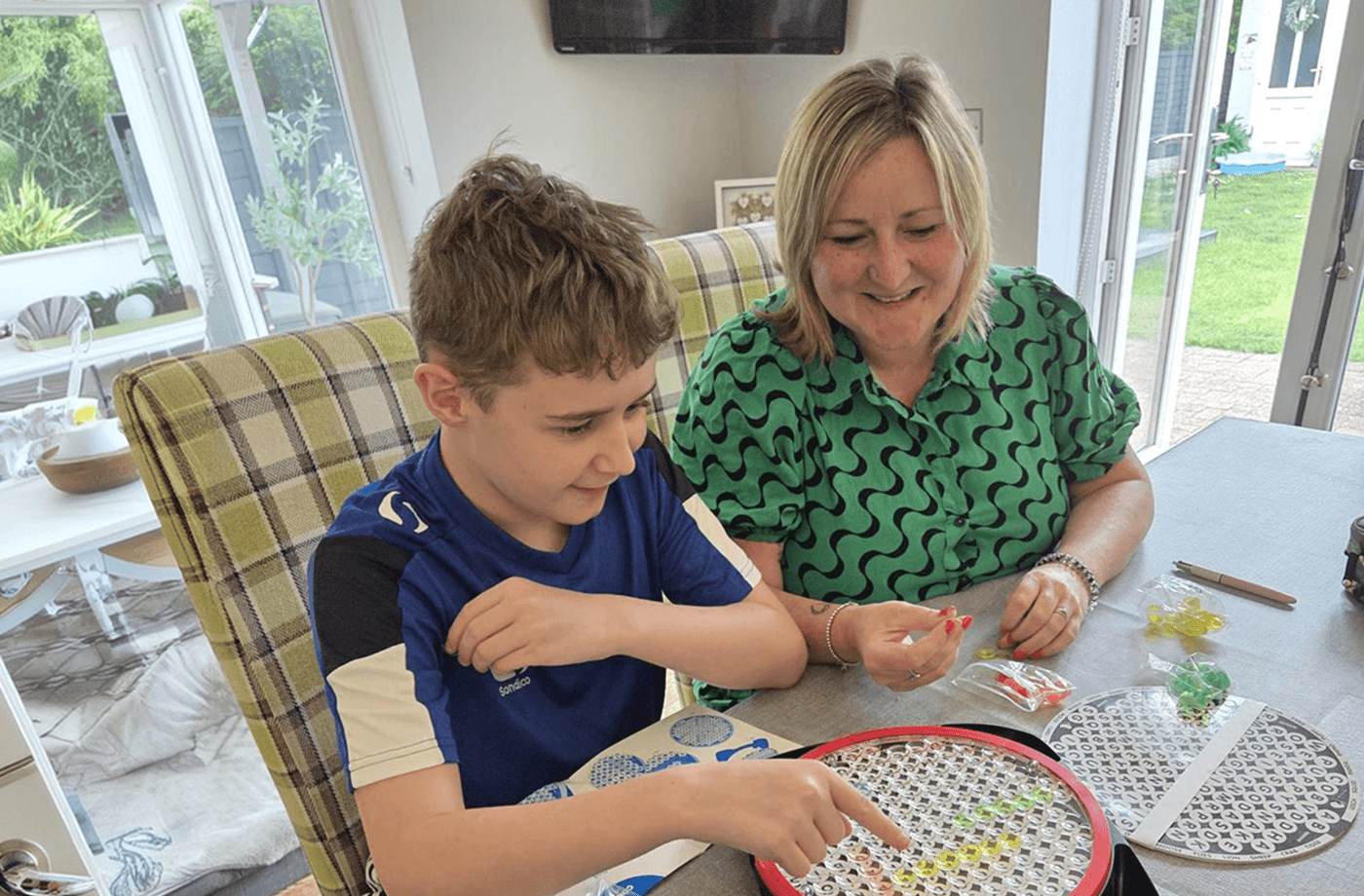
My first priority is always to build a strong, trusting relationship with both the child and their parent or carer. Using warmth, empathy, humour and genuine curiosity, I take time to understand each student's unique strengths, interests, challenges and aspirations. I also value parents as experts on their child and dedicate time each session to listening to their observations, concerns and ideas.
Every lesson is individually planned to reflect the child's profile, interests and learning goals. My sessions are creative, flexible and responsive, designed to reduce anxiety while fostering curiosity, confidence and a genuine enjoyment of learning. One session might involve shopping for ingredients to practise phonics and maths, dressing up as pirates to learn times tables, bouncing basketballs to develop hand-eye coordination and concentration, or discussing and scribing an essay on A Christmas Carol. Some children learn best through movement and play, others through quiet conversation, research projects or carefully scaffolded academic work. I adapt my teaching to fit the child, not the other way around.
Supporting Children with Anxiety
Anxiety is one of the greatest barriers to learning, and many of the children I work with have experienced emotionally based school avoidance (EBSA), trauma or significant anxiety. As a qualified child therapist with an MSc in Psychodynamic Counselling for Children and Adolescents, I understand how anxiety affects both learning and behaviour.
My first aim is to help children feel emotionally safe. Through empathy, humour, patience and genuine connection, I establish trusting relationships that allow learning to take place. I help children recognise how anxiety feels within their body and teach practical strategies such as breathing, grounding, orienting and sensory regulation to help them return from states of fight, flight or freeze. These techniques are introduced in a playful, relaxed and non-threatening way, enabling children to gradually develop confidence, resilience and emotional regulation.
Supporting Emotional Regulation
Behaviour is communication. Aggression, withdrawal or refusal often represent a child's attempt to cope with overwhelming emotions rather than deliberate defiance. My approach is always to understand what lies beneath the behaviour before considering how best to respond.
I provide calm, consistent boundaries alongside warmth and empathy, using a quiet voice, co-regulation and simple de-escalation strategies to help children feel safe. Humour, where appropriate, often helps to rebuild connection once a child feels emotionally regulated. My aim is never simply to manage behaviour, but to help children understand themselves and develop healthier ways of responding to stress and challenge.
Supporting Neurodivergent Learners
I have extensive experience supporting children and young people with autism (ASC), ADHD, dyslexia, dyspraxia (Developmental Coordination Disorder), Developmental Language Disorder (DLD), speech and language needs, sensory processing differences, executive functioning difficulties and Pathological Demand Avoidance (PDA).
Every neurodivergent learner has a unique profile of strengths and differences. I carefully observe sensory preferences, communication style, processing speed, attention, motor skills, working memory, executive functioning, emotional regulation and special interests, ensuring that each lesson is adapted to the individual rather than expecting the child to fit a particular teaching style.
As the parent of a neurodivergent son, I also understand first-hand the realities of navigating education, diagnosis and support services. Alongside my professional training, I have undertaken extensive independent study into therapies and interventions that support neurodivergent children, including sensory integration, occupational therapy strategies, speech and language approaches, movement-based learning and nervous system regulation. This knowledge enables me to create practical, individualised programmes that build confidence alongside academic progress.
Supporting Children with Pathological Demand Avoidance (PDA)
Many children with a PDA experience everyday demands as overwhelming, often because of underlying anxiety, sensory differences or previous experiences of feeling unsafe or misunderstood. My approach is highly collaborative, indirect and flexible.
Rather than increasing demands, I build motivation through play, humour, shared activities and genuine curiosity. I work alongside the child, offering choices wherever possible and allowing plenty of opportunities for them to retain a sense of autonomy. I avoid unnecessary confrontation and recognise that resistance or refusal is often a sign of escalating anxiety rather than unwillingness to learn. By reducing pressure and increasing feelings of safety and control, children are able to engage far more successfully.
Developing Independence
I believe confidence develops through success. I use a gradual "I do, We do, You do" approach, carefully modelling new skills before working collaboratively and then encouraging increasing independence. Appropriate scaffolding enables children to experience success while developing resilience, competence and self-belief, without becoming over-reliant on adult support.
Teaching Mathematics
I teach primary mathematics and secondary mathematics up to Functional Skills level using the CPA (Concrete, Pictorial, Abstract) approach.
Children first develop understanding through practical, hands-on experiences using real objects and manipulatives. Once concepts are secure, they progress to visual representations before finally moving to abstract mathematical symbols and formal written methods. This sequential approach develops genuine conceptual understanding while reducing maths anxiety and building confidence. As with all my teaching, lessons are adapted to each child's interests, strengths and preferred learning style.
Teaching English
As a graduate in English Literature and an experienced teacher of English from early phonics through to GCSE English Language and English Literature, I believe every child can become a confident reader, writer and communicator when learning is tailored to their individual needs.
For younger children, I teach phonics using structured programmes such as Read Write Inc. and Twinkl Phonics, adapting lessons to suit each child's pace and preferred learning style. Reading is developed through carefully matched texts, shared reading, storytelling, discussion and audiobooks, helping children develop both decoding skills and a genuine love of books.
I have extensive experience supporting pupils with dyslexia and understand that literacy difficulties often affect confidence as much as attainment. My teaching combines structured, multisensory approaches with explicit teaching of phonics, spelling patterns, vocabulary, reading comprehension and written expression. I break learning into manageable steps, reduce cognitive overload and teach practical strategies to support memory, organisation and executive functioning. Where handwriting presents a barrier, I use alternative recording methods, including typing, speech-to-text technology and scribing where appropriate, ensuring that children can demonstrate their knowledge without being limited by the mechanics of writing.
I teach English Language and English Literature GCSE to students with a wide range of needs, including those who have experienced disrupted education, anxiety or prolonged absence from school. Lessons include literary analysis, essay planning, quotation retrieval, creative and transactional writing, revision strategies, exam technique and the organisation of extended written responses. My aim is not simply to improve grades, but to help students become confident readers, critical thinkers and articulate communicators.
I firmly believe literacy develops most successfully when it is meaningful and engaging. I regularly build learning around a student's interests, creating projects on topics such as Formula One, Pokémon, history, science or space exploration to develop reading, research and writing skills. For children who enjoy fiction, I use novels, drama and storytelling to explore themes such as friendship, resilience, bullying and self-esteem. For others, carefully selected non-fiction texts provide equally rich opportunities to develop literacy.
Whether I am introducing a child's first letter sounds or preparing a young person for GCSE English, my goal remains the same: to remove barriers to learning, build confidence and help every student discover that they are capable of success.